Buying
Buying a Morgantown Home With a Second Unit
Before relying on a Morgantown home's second unit, compare the layout with zoning, rental, permit, parcel, utility, and financing records.
Last reviewed · Next source review by
A second unit can make a Morgantown home more useful, but the extra kitchen, exterior door, or separate meter does not settle what the space is allowed to be. Before you rely on rental income or plan for two independent households, match the physical layout to the parcel, zoning, rental, occupancy, permit, utility, financing, and insurance records for that address.
That review protects the part of the opportunity that caught your attention. If the records support the intended use, you can plan around something concrete. If they do not, you can price the uncertainty before a contract deadline turns it into a rushed decision.
This is a buyer's review framework, not legal, lending, appraisal, insurance, zoning, or inspection advice. The responsible city office and qualified transaction professionals should answer questions for the specific property.
Key takeaways
- Treat "second unit," "apartment," "duplex," and "ADU" as descriptions to verify, not interchangeable proof of an approved use.
- Confirm whether the address is inside Morgantown city limits before applying city zoning or rental rules.
- Compare city records, permits, the parcel, the physical layout, utilities, and seller documents before relying on rent.
- Ask the lender, appraiser, insurer, attorney, inspector, and city offices about the same verified property configuration.
Start with the use, not the listing label
Write down what you expect the second space to do. Will it be occupied under a separate lease? Does it have its own entrance, kitchen, bathroom, sleeping area, address label, meter, or heating system? Would the purchase still work if the space could not be rented as a separate dwelling?
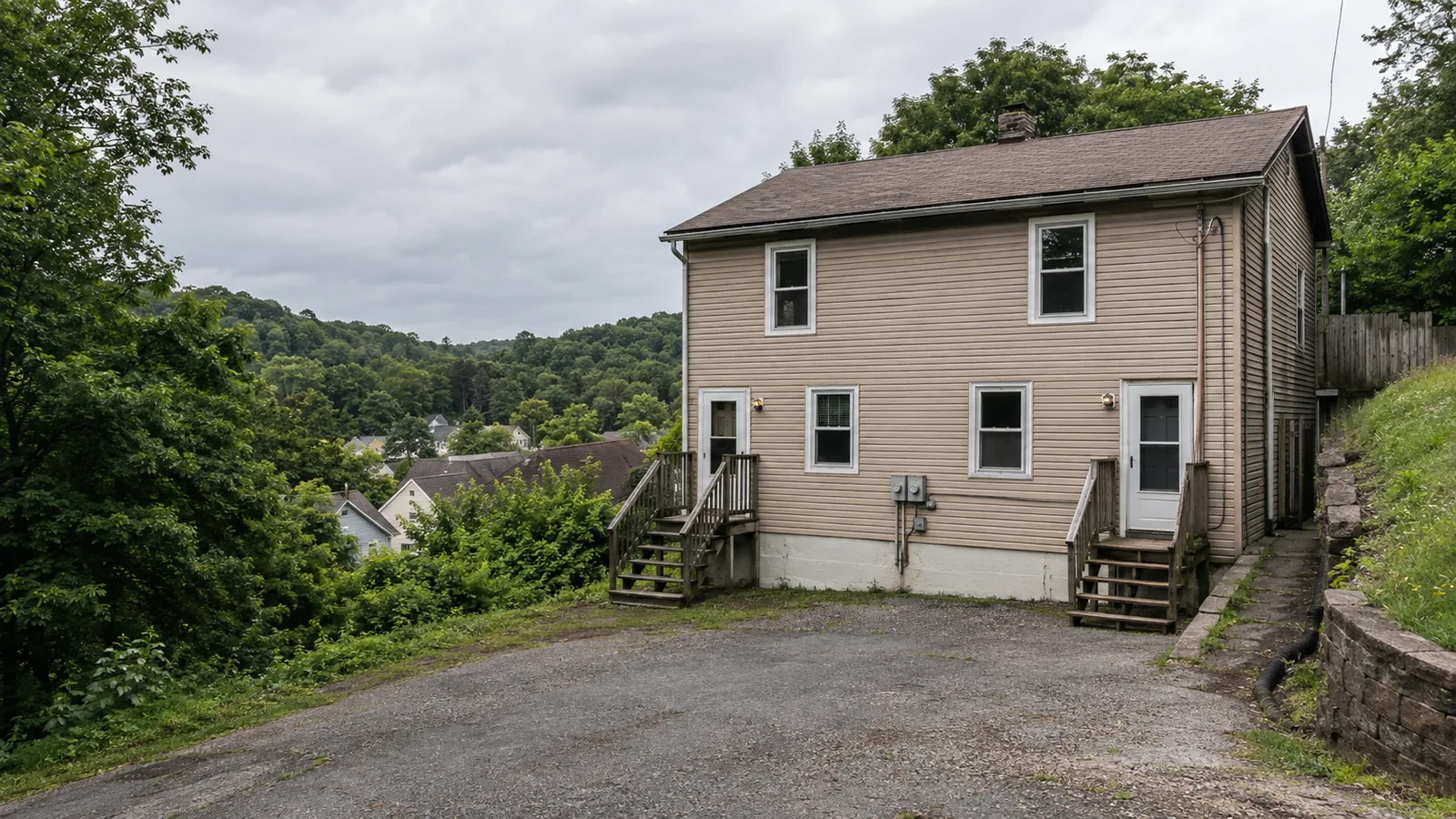
Those questions keep the review tied to your decision. A finished lower level with a sink and exterior door is not automatically an approved rental unit. A property marketed as a duplex may need records that support two recognized units. An accessory dwelling unit may have a different path from an established two-unit property.
Do not try to classify the property from photos. Ask which current record identifies the approved use and unit count, then have the appropriate professional interpret it.
Confirm the jurisdiction and parcel first
A Morgantown mailing address may sit outside the city's corporate limits. The City's permitting page directs readers to the zoning viewer to check city-limit status. Use the Morgantown zoning map as the starting point, then identify the office responsible for the exact address.
Next, find the parcel through the Monongalia County Assessor search. Record the district, map, parcel, owner, and deed reference shown there. Assessor information helps identify the property, but it does not replace title work or establish that every interior space has an approved use.
Keep the street address, parcel identity, city-limit status, zoning district, and claimed unit count together in one worksheet. Every later request should refer to the same property.
Make six descriptions of the property agree
A useful review compares the property from six directions:
- The listing and seller-provided description.
- The assessor parcel and deed information supplied through the transaction.
- The zoning district and any relevant land-use record.
- Rental registration, compliance, and occupancy information.
- Permits for additions, remodeling, electrical work, plumbing, mechanical work, or a change of occupancy.
- The building you can inspect, including entrances, kitchens, bathrooms, panels, meters, heating equipment, and shared areas.
One record does not have to contain every detail. The problem is an unexplained conflict. If the listing describes two units while city records identify one rental unit, preserve the difference as an open question. Do not fill the gap with an assumption or an old advertisement.
The City's building and construction page separates residential additions and remodels from electrical, plumbing, mechanical, and gas scopes. Its permitting page says each proposed scope requires a separate application type. Ask which records exist for the work that created or changed the second space.
Verify rental and occupancy records directly
For property within Morgantown city limits, the City says all rental property, or property offered for rent, must be registered. Its rental information page says rental units are inspected once every three years. The same page explains that Code Enforcement can check registration, a letter of compliance, occupancy type, and allowed occupancy.
Ask for current information tied to the address and unit designation. Then compare the response with the leases, seller records, physical layout, and listing. A past lease shows that someone rented the space. It does not by itself answer zoning, registration, occupancy, permit, financing, or insurance questions.
If the property is outside city limits, identify the correct jurisdiction and replace the city checklist with that office's current requirements.
Account for the 2027 ADU change
West Virginia Code Section 8-42-2 addresses at least one accessory dwelling unit on a parcel with a single-family dwelling and says an ADU may be attached, detached, or internal. Section 8-42-3 says a municipal policy in effect on or after January 1, 2027 is invalid to the extent it conflicts with that article. It also says other applicable regulatory requirements remain in place.
This does not turn every existing second space into an approved ADU. It means the timing of a purchase, renovation, or proposed use may cross a changing municipal rule set. Ask Morgantown Development Services for the current process for the exact address and the date when you expect to use the space. If the answer affects the purchase, request the record or written confirmation your attorney and lender need.
Inspect the second unit as part of the whole building
A separate entrance is only one part of the physical review. Have the inspector and appropriate licensed contractors identify how the spaces share or separate electrical service, heating and cooling, water, wastewater, hot water, laundry, ventilation, drainage, and shutoffs. Ask how an emergency exit works from each sleeping area and which doors connect the spaces.
Map every visible meter and panel to the area it appears to serve, but let the utility provider and qualified trades confirm the setup. Two meters do not prove two approved units. One meter does not prove that separate occupancy is prohibited. The configuration is evidence to reconcile with records, not a shortcut to the answer.
Also ask who controls shared areas, exterior steps, parking, storage, yard access, and major equipment. Those details affect daily use even when the paperwork is complete.
Bring the verified configuration to financing and insurance
Give the lender, appraiser, and insurer the same description supported by the property records. Ask how they will classify the home, what rental income they may consider, and which documents they require. Do this before building a purchase budget around the second unit.
Keep two versions of the budget: one using only income the lender confirms it can consider, and one with no second-unit income. The second version shows whether the purchase still fits if approval, occupancy, repairs, or leasing takes longer than expected.
If the property is already occupied, add leases, deposits, access, notices, and the ownership handoff to the attorney's review. The site's Morgantown rental property due diligence guide covers that operating file in more detail.
Match the offer to the unanswered questions
List each open issue, the person or office answering it, the document needed, and the contract date that controls the decision. Zoning, rental records, permits, inspection findings, financing, appraisal, insurance, and title may move on different schedules.
The broader Morgantown offer-to-closing checklist can help place those tasks beside the other transaction deadlines. Your agent and attorney can explain available contract terms and how to handle unresolved property questions.
Final second-unit checklist
- City-limit status and the responsible jurisdiction are confirmed.
- Parcel identity, deed information, and address labels refer to the same property.
- The zoning district and current approved use have been checked.
- Rental registration, compliance, occupancy type, and allowed occupancy were verified when applicable.
- Permits and plans were requested for work that created or changed the space.
- The physical layout and shared systems received professional review.
- Utility accounts and meter assignments were confirmed.
- The lender, appraiser, insurer, attorney, and title professional received the verified configuration.
- The budget still works if the second unit cannot produce income immediately.
- Every unresolved question has an owner, a document, and a contract deadline.
If you are comparing a Morgantown home with a second unit, contact Michelle with the address and the record that is still unclear. She can help keep the property questions and transaction dates attached to the decision you are making.
Sources
- Rental InformationCity of Morgantown · Accessed September 23, 2026
- Morgantown Zoning MapCity of Morgantown · Accessed September 23, 2026
- Permitting, Licensing, and RegistrationCity of Morgantown · Accessed September 23, 2026
- Building and ConstructionCity of Morgantown · Accessed September 23, 2026
- Parcel SearchMonongalia County Assessor · Accessed September 23, 2026
- West Virginia Code Section 8-42-2West Virginia Legislature · Accessed September 23, 2026
- West Virginia Code Section 8-42-3West Virginia Legislature · Accessed September 23, 2026
A local next step
Make the next step feel clearer.
Michelle can help turn this guidance into a calm, property-specific plan for a first home, sale, or multifamily property in Morgantown.
Contact Michelle
About the author
Michelle Davidson
Michelle Davidson is a Morgantown native and REALTOR(R) who works with first-time home buyers and multifamily property investors. She has firsthand experience buying, selling, and owning local property.
Meet Michelle