Buying
Buying a Morgantown Home With a Sewer Lateral
Check sewer responsibility, service records, visible clues, specialist findings, and permit questions before buying a Morgantown home.
Last reviewed · Next source review by
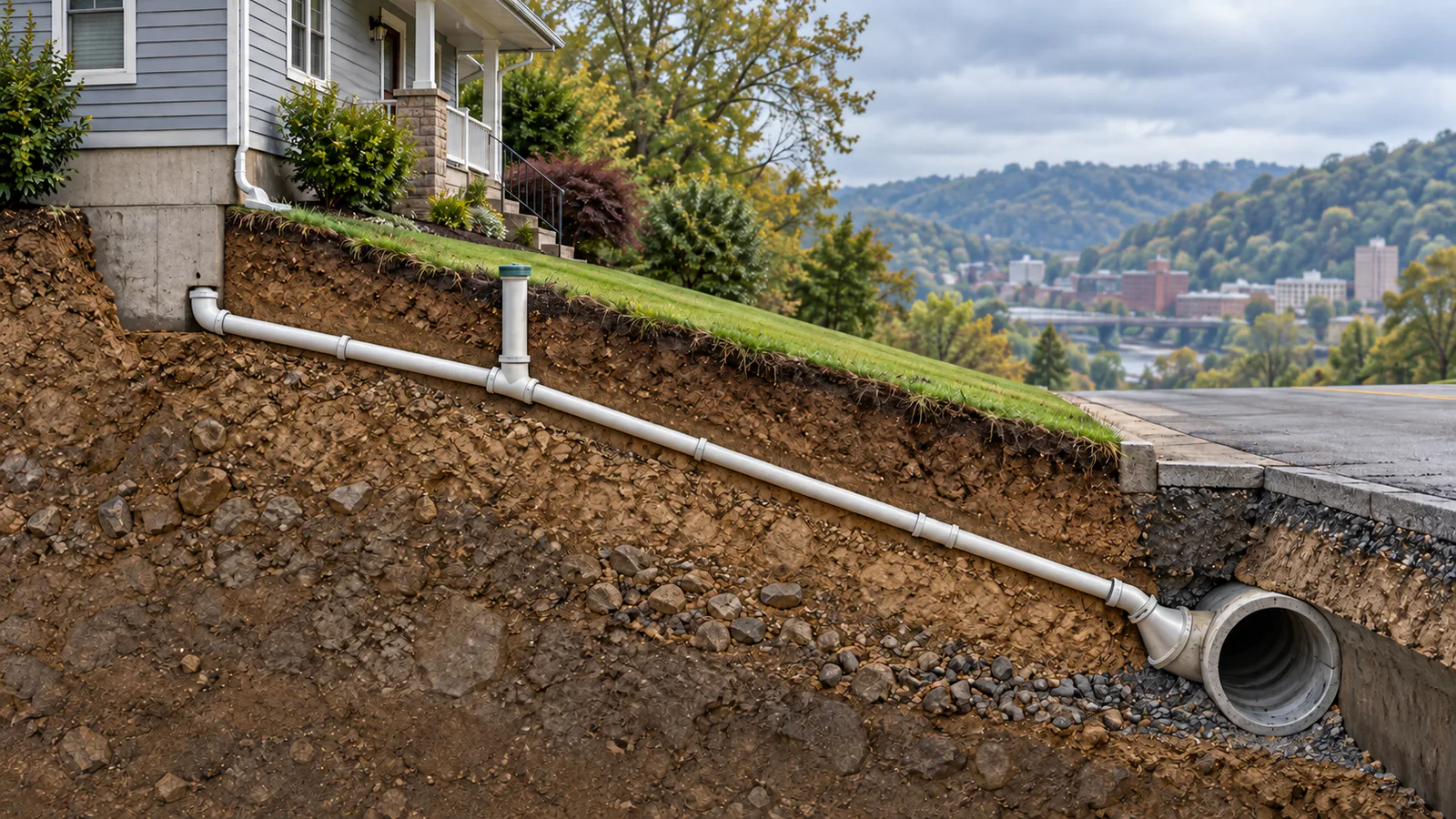
A house can feel right while one important pipe stays completely out of sight. The sanitary sewer lateral carries wastewater from the building toward the public main. Before buying a Morgantown home, identify the utility, learn where its responsibility ends, gather the property's sewer records, and decide whether the available evidence supports a specialist review.
That work does not need to turn every purchase into an excavation project. It gives the buyer a calm way to separate a routine unknown from a question that could affect cost, timing, or future yard and street work.
Key takeaways
- Confirm the sewer provider and the provider's current responsibility boundary for the exact address.
- Ask for service calls, repairs, inspections, permits, invoices, and any recording from a prior camera review.
- Treat interior drainage, the private lateral, the public main, and stormwater connections as separate questions.
- Schedule any plumber or utility follow-up before the contract deadline that controls the buyer's decision.
Start with the address and responsibility boundary
Do not rely on a Morgantown mailing address alone. Confirm which utility serves the property and whether the house uses public sewer, a private system, or another arrangement. A seller-provided bill, utility confirmation, and the property's records can help connect the address to the correct system.
Morgantown Utility Board has stated that its repair responsibility ends where the home's sewer lateral connects to the public main. The portion between that connection and the house can therefore be the property owner's responsibility. Verify that boundary with MUB for the specific property because the line route, easements, shared arrangements, and utility provider may differ by address.
The boundary matters for two reasons. First, a blockage or break does not by itself show which party must repair it. Second, a contractor may need access across a yard, driveway, sidewalk, or street to reach the affected section. Those are property-specific questions, not conclusions that can be drawn from a listing photo.
Build a sewer record before diagnosing the pipe
Ask the seller, through the transaction process, for documents that describe what happened and what work was completed. Useful items may include:
- plumbing invoices and service reports;
- records for clearing a blockage or removing roots;
- a prior camera recording and the written findings tied to it;
- repair proposals, completed-work invoices, and warranties;
- utility notices or smoke-test correspondence;
- permits for plumbing, excavation, or work affecting a public right of way; and
- details about any sewage backup, recurring slow drainage, or lower-level cleanup.
Match each document to the address, date, contractor, and section of pipe. An invoice that says "sewer repair" may not show whether the work involved an interior drain, the building sewer, the connection at the main, or a public line.
The absence of a record does not prove that the lateral is defective. A recent invoice does not prove that every section is sound. Records narrow the next question and help a qualified plumber avoid starting with an incomplete history.
Decide whether a specialist review fits the property
A general home inspection can document visible plumbing conditions, drainage performance at the time of inspection, and signs that deserve follow-up. A buried lateral usually needs different access and equipment. Ask the inspector and a qualified plumber which review makes sense for the property rather than assuming every camera inspection reaches the same endpoint.
If a plumber performs a camera review, record the scope as carefully as the result:
- Where did the camera enter the system?
- Which direction and approximate distance did it cover?
- Did it reach the connection at the public main?
- What prevented further review, if it stopped early?
- Which observations need repair, monitoring, cleaning, or another opinion?
- Will the buyer receive the recording and written findings?
A finding such as root entry, a displaced joint, standing water, buildup, or a material change needs professional interpretation. Ask where the condition appears, how confidently it was located, and what additional work would confirm the repair scope. Avoid converting one image into a cost estimate without the contractor who would be responsible for the work.
MUB also says a customer with an outside plumbing issue that might be on the utility side can call before hiring a plumber. Its services page states that a technician can review the problem, identify whether it is on MUB's side or the customer's side, and provide that consultation without a fee. Confirm the current process and availability directly with MUB.
Keep sanitary sewer and stormwater questions separate
The pipe leaving the house should not become a catch-all explanation for every water problem. Interior fixture drains, the private lateral, the public sanitary main, roof drainage, foundation drainage, and the stormwater system serve different purposes.
MUB's smoke-testing guidance explains why that distinction matters. The utility uses smoke testing to locate possible inflow or infiltration into sanitary sewers. Its examples include roof leaders, yard drains, foundation drains, faulty connections, damaged joints, and other openings that may allow stormwater or groundwater into the system.
The same guidance says smoke appearing in a yard or driveway may indicate a drain connected to the sanitary line, a missing direct connection, or a cracked lateral. That observation is a starting point, not a diagnosis. MUB notes that possible responses can range from disconnecting a drain to lining part of a lateral or excavating, depending on what further review finds.
For a buyer, the practical step is to ask whether the property has received a smoke-test notice or follow-up, whether any corrective work was requested, and whether the seller has the resulting records. If the answer raises a new question, route it to MUB and the appropriate plumbing professional while the contract still allows time for review.
Check permits and jurisdiction before planning work
Inside Morgantown city limits, the city uses the Morgantown Access Portal for building-related applications. Its permitting page says separate application types are required for separate work scopes, including plumbing work. The same page directs users to the city's zoning viewer to verify whether an address is inside city limits.
Ask the city which records can be retrieved for past work and which applications would apply to a proposed repair. If the property sits outside Morgantown, identify the municipality or county office responsible for the address instead of assuming the city's process applies.
Permit research and utility approval may answer different questions. A city file can show the scope submitted for local review. The utility can address its system, connection requirements, and work near its infrastructure. A contractor can explain the physical repair method. Keep those answers together without treating one as a substitute for the others.
Put the sewer review on the contract calendar
Add the sewer question to the same plan used for the rest of the property review. The site's Morgantown buying checklist explains how inspection, financing, title, insurance, and local records move on parallel tracks after an accepted offer.
For the lateral, write down:
- the provider and current responsibility boundary;
- the records requested from the seller and utility;
- the inspection or plumber appointment date;
- the exact section that was reviewed;
- any permit, easement, access, or right-of-way question;
- the professional responsible for the next answer; and
- the contract deadline for the buyer's decision.
For an older property, combine this list with the site's older Morgantown home guide, especially its drainage, permit, utility, and repair-record checks. A house does not need a perfect file to remain worth considering. It needs enough reliable information for the buyer to understand the unresolved question and choose the next step deliberately.
If a Morgantown property has a sewer history, an unclear line route, or a proposed repair that needs to fit the purchase calendar, contact Michelle with the address and the records already available. She can help keep the property questions and transaction dates in one organized plan.
Sources
- ServicesMorgantown Utility Board · Accessed September 30, 2026
- HomeServe to Offer MUB Customers Service Line and Other WarrantiesMorgantown Utility Board · Accessed September 30, 2026
- Smoke TestingMorgantown Utility Board · Accessed September 30, 2026
- PoliciesMorgantown Utility Board · Accessed September 30, 2026
- Permitting, Licensing, and RegistrationCity of Morgantown · Accessed September 30, 2026
A local next step
Make the next step feel clearer.
Michelle can help turn this guidance into a calm, property-specific plan for a first home, sale, or multifamily property in Morgantown.
Contact Michelle
About the author
Michelle Davidson
Michelle Davidson is a Morgantown native and REALTOR(R) who works with first-time home buyers and multifamily property investors. She has firsthand experience buying, selling, and owning local property.
Meet Michelle