Selling
Selling a Morgantown Home: A Documentation Plan
Make a Morgantown listing feel easier to trust by organizing repair records, permits, system details, access notes, and property documents.
Last reviewed
A seller can make a Morgantown home feel easier to understand before choosing paint colors or moving furniture. Start by organizing the facts that a buyer, agent, inspector, appraiser, lender, attorney, or title professional may need. Clear records do not guarantee a sale. They reduce avoidable confusion and let the home's strengths stand on better-supported ground.
This is an organization plan, not a statement about what any seller must disclose. Disclosure and contract duties depend on the property and transaction. Review them with the appropriate real estate and legal professionals.
Key takeaways
- Build one property file before the listing goes live.
- Separate documented facts from estimates and memory.
- Resolve address, parcel, permit, and ownership questions early.
- Keep private account data out of the marketing package.
What belongs in the first seller file?
The first file should explain the house as it exists today. It does not need to be polished. It needs clear labels, dates when known, and a place for unanswered questions.
Start with major systems and completed work. Gather roof invoices, heating and cooling service records, water heater information, electrical or plumbing invoices, appliance manuals, transferable warranties, and documentation for drainage or structural repairs. If a contractor performed the work, record the contractor and approximate completion date.
Create a separate list for improvements that lack records. Do not turn a guess into a date. A note that says "date unknown, installed before current ownership" is more useful than a confident but unsupported year.
The Morgantown seller guide puts this file in the broader preparation and pricing process.
How should permits be checked?
Match material changes to the records available for the property. Finished rooms, additions, decks, electrical upgrades, plumbing changes, and changes in use may raise permit questions. The applicable rules depend on jurisdiction and scope.
The City of Morgantown directs building, electrical, plumbing, rental, and planning applications through its permitting and registration portal. The city also advises users to check its zoning viewer when they need to confirm whether an address is within city limits.
If a permit record is unclear, ask the responsible office about the correct process. Do not advertise work as permitted based only on a contractor's invoice or a seller's memory. An invoice proves that someone billed for work. It does not establish the permit history by itself.
Which public records should a seller compare?
Compare the property file with the public parcel record and recorded ownership documents. The Monongalia County Assessor links to its parcel database, county clerk record search, tax records, FEMA maps, and statewide mapping resources.
Public records can contain abbreviations, historical values, or information collected for a specific government purpose. They are starting points, not a substitute for a survey, title examination, appraisal, inspection, or legal review.
Check these items early:
- owner names and vesting shown in available records;
- parcel identifiers and mailing address;
- broad building description;
- recorded deeds or other documents identified by a title professional;
- known easements, shared drives, or access arrangements; and
- recent work that may not yet appear in an older public record.
If the marketing description and the public record disagree, resolve the reason before copying either version into a listing.
How do Morgantown access and parking details get documented?
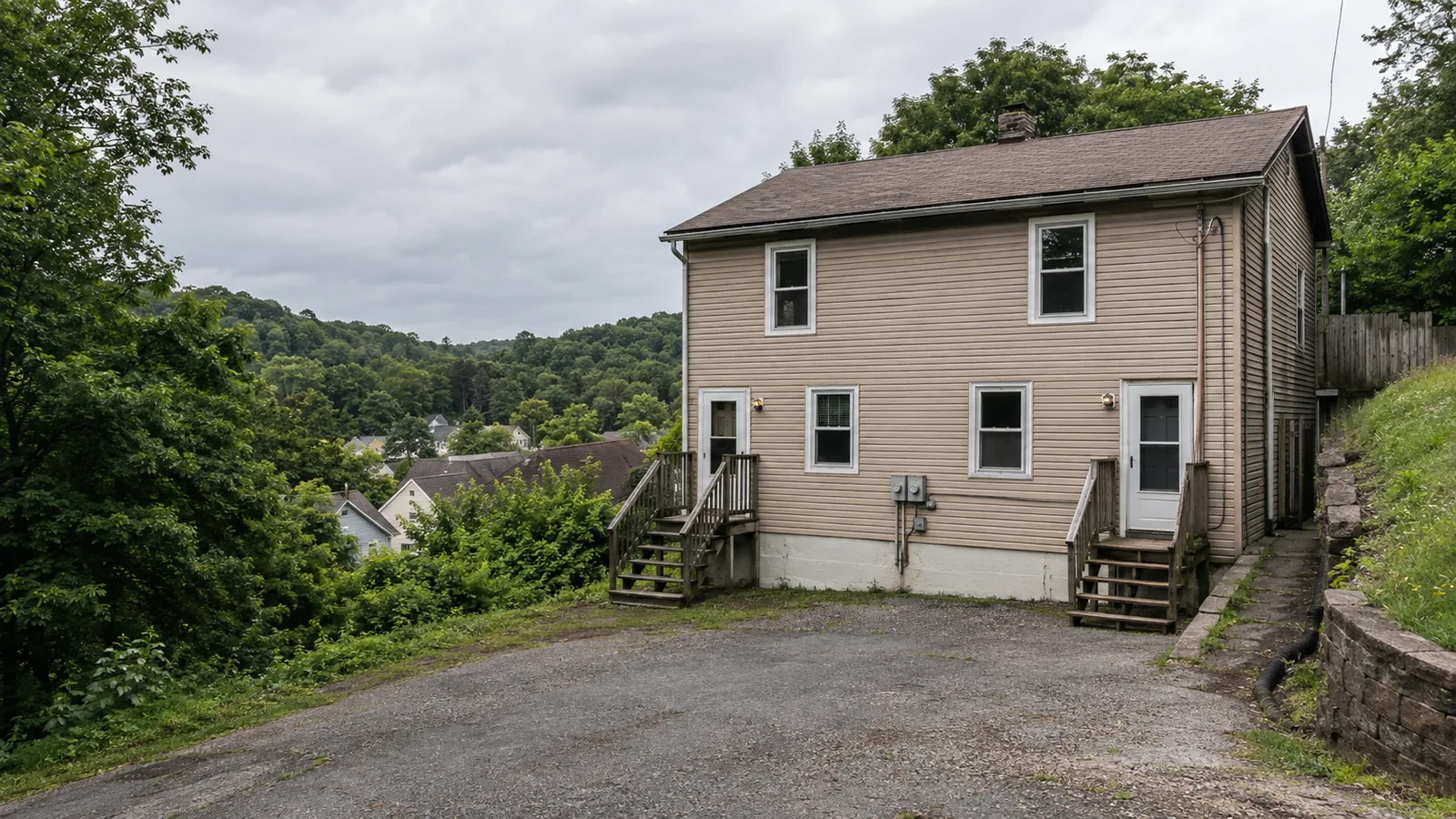
Describe the arrangement a buyer can verify. Note the driveway location, garage access, off-street spaces, shared areas, alleys, steps, and any written agreements supplied for review. Avoid broad claims such as "easy parking" or "all-weather access."
Morgantown properties can sit on steep streets or use access that is not obvious from the front photo. A short diagram, survey supplied through the transaction, or clear written note may answer a question faster than another marketing sentence.
Do not promise that public street spaces belong to the property. If permits, restrictions, or other rules affect parking, confirm the current requirements with the responsible authority.
What changes for a rented or historic property?
A rented property needs a separate operating file. Organize leases, registration and compliance records, deposit information, notices, utility responsibility, service agreements, and income or expense records that the seller is authorized to share. Work with qualified professionals on tenant rights, notice, deposit handling, and transfer obligations.
A property within a historic district or listed as a historic resource may require another address-level check. The City of Morgantown's Historic Landmarks Commission lists the South Park, Downtown Morgantown, Morgantown Wharf and Warehouse, Chancery Hill, and Greenmont historic districts.
Historic status should not be reduced to a decorative listing phrase. Verify the boundary and current requirements before making claims or planning exterior changes.
What should stay out of the marketing folder?
The working file and the public marketing package are different. Keep bank account numbers, full utility account identifiers, alarm codes, signatures, personal correspondence, tenant private information, and documents containing unnecessary personal data out of public materials.
Share transaction documents through the process recommended by the broker, attorney, lender, title professional, or other responsible party. A tidy folder is useful only if access is controlled.
| Keep in the working file | Use in public marketing only when verified and appropriate |
|---|---|
| Full invoices and warranties | Concise description of documented work |
| Permit and registration records | Verified statement about approval or status |
| Surveys and title-related documents | General property feature, not a legal conclusion |
| Utility and service history | Approved factual summary without account data |
| Lease and tenant records | Only information authorized for the sale process |
What is the final pre-listing records check?
Review the file with the people responsible for the listing and transaction. The goal is to know what can be stated, what needs more evidence, and what should be handled through a formal disclosure or document request.
- Major system ages are documented or labeled unknown.
- Repair invoices and transferable warranties are organized.
- Permit and registration questions have been identified.
- Parcel and ownership information has been compared.
- Access, parking, and shared-use questions are visible.
- Rental or historic status has been checked when relevant.
- Private information has been removed from public materials.
- Unsupported claims have been cut from the listing draft.
Once the file is usable, preparation decisions become easier to discuss and less stressful to prioritize. Contact Michelle about selling a Morgantown home with the street or general area and the timing you are considering.
Sources
- Permitting, Licensing, and RegistrationCity of Morgantown · Accessed August 23, 2026
- Monongalia County AssessorMonongalia County Assessor · Accessed August 23, 2026
- Historic Landmarks CommissionCity of Morgantown · Accessed August 23, 2026
A local next step
Make the next step feel clearer.
Michelle can help turn this guidance into a calm, property-specific plan for a first home, sale, or multifamily property in Morgantown.
Contact Michelle
About the author
Michelle Davidson
Michelle Davidson is a Morgantown native and REALTOR(R) who works with first-time home buyers and multifamily property investors. She has firsthand experience buying, selling, and owning local property.
Meet Michelle