Selling
Selling a Monongalia County Home With Well and Septic Records
Organize private-well and septic records, service history, testing, buyer access, and handoff details before selling in Monongalia County.
Last reviewed · Next source review by
Before listing a Monongalia County home with a private well or septic system, build a small record file for each system. Confirm what serves the house, find the available permits and completion records, gather service receipts, and plan access for any testing or inspection. This gives buyers something more useful than a verbal description and helps the seller spot unanswered questions while there is still time to handle them calmly.
A Morgantown mailing address does not prove that a property has public water or public sewer. Some homes have two private systems. Others pair a private well with public sewer, or public water with an on-site sewage system. Treat water and wastewater as separate facts from the start.
Key takeaways
- Verify the water source and wastewater setup for the exact property.
- Gather permits, drawings, test results, pumping receipts, repair invoices, and equipment details without promising what the records do not establish.
- Decide when to order new testing or service with the listing, lending, inspection, and contract timeline in mind.
- Give buyers and qualified professionals clear access while protecting account numbers and other private information.
This is general seller education, not health, environmental, inspection, engineering, legal, or lending advice. The local health department and the qualified professionals involved in the sale should answer property-specific questions.
Confirm what serves the house
Start with two plain questions: where does the drinking water come from, and where does wastewater go? Check the seller's bills, service records, permits, and any prior closing documents. If a public utility is part of the setup, ask that provider what it can confirm for the address.
Tie every request to the correct parcel and street address. Similar mailing descriptions, older owner names, or multiple structures can make a record search harder than expected. If the house, parcel, or service address appears differently across documents, preserve each version for the health department, title professional, or utility to review.
Do not turn a missing bill into a conclusion. A home without a sewer charge may have an on-site system, but the absence of one document does not identify the system or show its condition. Record what is confirmed, what source confirmed it, and what still needs an answer.
Build the private-well file
West Virginia's individual water supplies page lists separate records and forms for well construction or modification, completion, pump installation, abandonment, and water analysis. The Monongalia County Health Department's Environmental Health program is the local starting point for available records and the current sampling process.
Look for:
- the original well permit and completion report;
- a sketch or other record of the well location;
- pump, pressure tank, treatment equipment, and repair invoices;
- prior water test reports with the sample date and laboratory name;
- disinfection, modification, or abandonment records; and
- instructions, filters, or service schedules for equipment that will remain with the property.
West Virginia says residents may request bacteriological testing through their local health department, and the state maintains a list of certified drinking-water laboratories. Ask which sample container, collection method, test panel, and timing fit the planned sale. An older report belongs in the history file, but it does not describe a new sample or guarantee what another party will require.
Before ordering optional work, ask how the buyer's lender, inspector, or other professionals may handle their own review. A seller can spend money on a test that is useful for planning yet does not satisfy a later transaction requirement. The point is to make the timing deliberate.
Build the septic-system file
The West Virginia On-Site Sewage Program publishes rules, installer information, and forms for installation or modification permits, existing-system affidavits, and home-loan evaluations. Its program page also distinguishes conventional systems from alternatives that may have pumps, controls, treatment components, or separate maintenance needs.
Gather any available:
- permit, design, approval, or installation document;
- drawing that locates the tank, treatment components, disposal area, and access points;
- pumping and inspection receipts;
- repair, replacement, or modification records;
- maintenance agreement, alarm information, or operating instructions; and
- report from a prior sale or loan evaluation.
The U.S. Environmental Protection Agency recommends keeping septic maintenance records and notes that a typical inspection reviews permits, design and installation information, pumping history, maintenance records, tanks, and other components. That is a useful outline for the seller's folder, not a substitute for the inspection that applies to this property.
Do not guess at the tank size, age, capacity, drainfield location, or system type when the paperwork is incomplete. Ask the health department what records may exist, then have the appropriate professional explain the system that is present.
Compare the records with the property
Once the files are assembled, compare them with the house and land. The goal is not to perform an inspection. It is to notice contradictions early enough to route them to the right person.
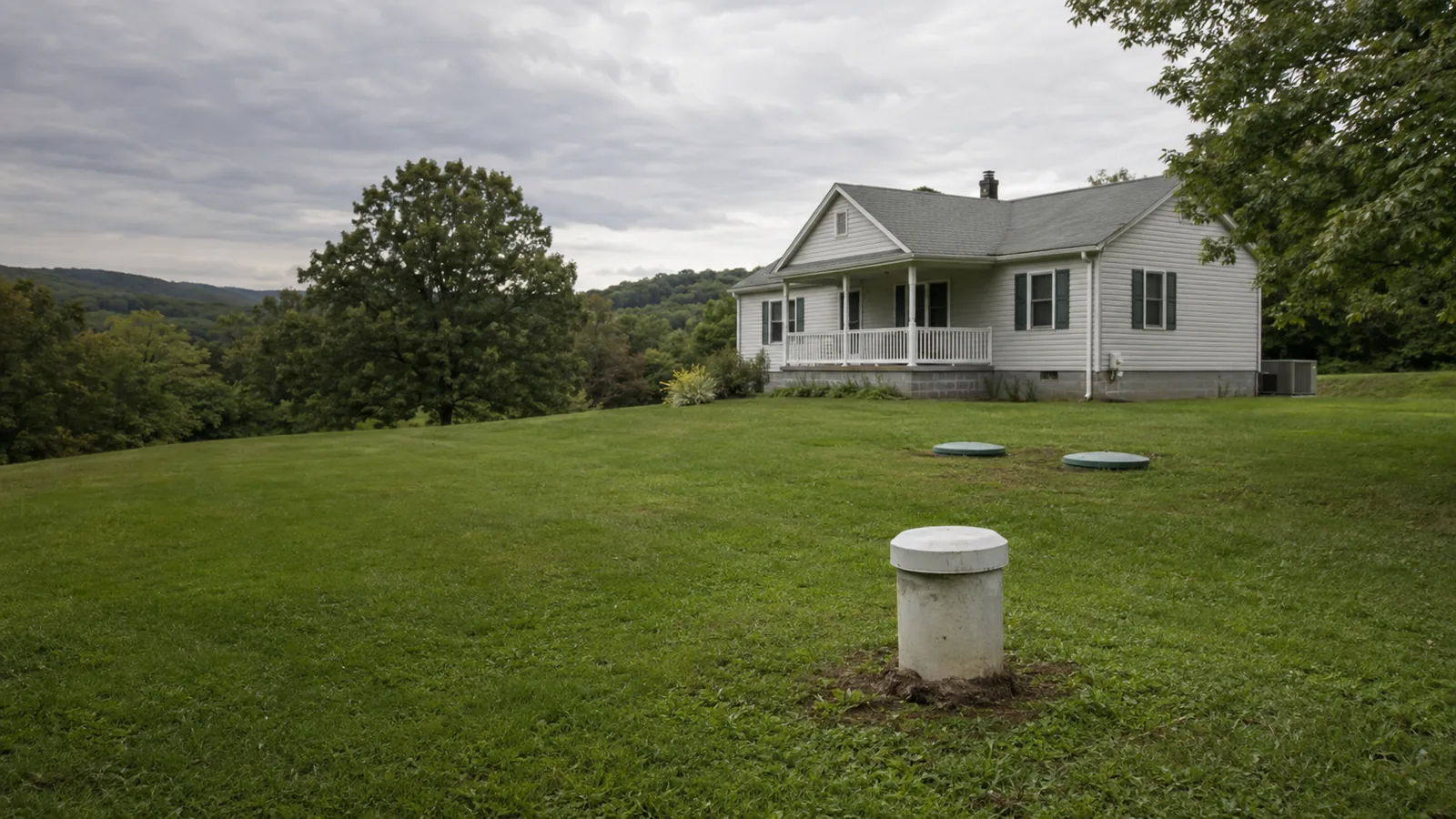
Check whether the believed well, tank, and access locations agree with the drawings. Note additions, detached structures, driveways, drainage work, grading, or other changes near an assumed system area. If a cap, alarm, pump, treatment unit, or service opening is present, match it to the available records without opening or operating equipment outside your competence.
An old sketch may still be helpful even when it is not precise enough for current work. Label it by source and date. Do not redraw it as though the new version were an official plan.
If a document and the visible property do not agree, keep both. A clean question such as "Which system component does this cover serve?" is more useful than a seller-created diagnosis.
Plan service, testing, and buyer access
Well and septic work can involve the health department, a laboratory, service companies, an inspector, the buyer's lender, and the professionals managing the contract. Put the likely steps on one calendar before the listing goes live.
For each appointment, record:
- who orders the work;
- who pays under the agreement;
- which parts of the property need to be accessible;
- whether utilities must remain on;
- when the report is expected; and
- who receives the report.
Clear brush, stored items, or locked barriers only when doing so is safe and authorized. Keep vehicles and heavy materials away from the believed septic area until a qualified professional confirms the layout. Make equipment instructions available, but do not leave passwords or account credentials in an open showing folder.
If service produces a repair recommendation, separate the observed condition from the proposed scope. Ask the relevant professional to put findings and recommended work in writing. Then review any repair, credit, disclosure, permit, or contract decision with the people responsible for that part of the sale.
Prepare a useful buyer handoff
A good handoff is organized without pretending the file is complete. Use separate sections for the well, septic system, public utility records, current reports, and open questions. Keep original reports intact. If you make a summary sheet, label it as a summary and point back to each source document.
Remove bank information, full account numbers, unrelated medical information, and private details about prior occupants. Share records through the method approved for the transaction rather than leaving the only copy at the property.
The seller-side file pairs well with the Monongalia County well and septic buyer guide. Buyers can use that guide to plan their own verification. The seller's job is to provide accurate available information and reasonable access, not to perform the buyer's due diligence for them.
Use this pre-listing checklist
- Confirm the water source and wastewater system separately.
- Match the street address, parcel, and owner names across available records.
- Request available local health department records.
- Gather well permits, completion records, pump work, tests, and equipment details.
- Gather septic permits, drawings, pumping receipts, inspections, repairs, and operating information.
- Compare record locations with the property and list any mismatch as an open question.
- Decide whether pre-listing testing or service fits the transaction plan.
- Prepare access for qualified professionals without disturbing system components.
- Keep new findings, invoices, permits, and reports together.
- Remove private information before sharing the buyer handoff.
- Put unresolved items and contract deadlines on one calendar.
The file does not have to be perfect to be useful. It should show what the seller knows, what supports that understanding, and what still needs professional review. If you are preparing a Monongalia County home with a private well or septic system for sale, contact Michelle with the property location and the records already in hand. She can help organize the next questions and keep them connected to the listing timeline.
Sources
- Environmental HealthMonongalia County Health Department · Accessed October 14, 2026
- Individual Water SuppliesWest Virginia Office of Environmental Health Services · Accessed October 14, 2026
- On-Site Wastewater ManagementWest Virginia Office of Environmental Health Services · Accessed October 14, 2026
- Frequent Questions on Septic SystemsU.S. Environmental Protection Agency · Accessed October 14, 2026
A local next step
Make the next step feel clearer.
Michelle can help turn this guidance into a calm, property-specific plan for a first home, sale, or multifamily property in Morgantown.
Contact Michelle
About the author
Michelle Davidson
Michelle Davidson is a Morgantown native and REALTOR(R) who works with first-time home buyers and multifamily property investors. She has firsthand experience buying, selling, and owning local property.
Meet Michelle