Selling
Selling a Morgantown Home With an Old Heating-Oil Tank
Prepare an old heating-oil tank for a Morgantown home sale by identifying the system, gathering records, and routing condition questions early.
Last reviewed · Next source review by
An old heating-oil tank does not have to derail a Morgantown home sale. It does need a clear identity before the listing makes claims about the home's heat, the tank's condition, or completed removal work. Start by locating the tank and connected piping, finding out whether the system is active, and gathering the records that support what you know.
That early work gives a seller more room to ask the right contractor, environmental, insurance, permit, and legal questions. It also helps a buyer understand what remains with the property instead of discovering an unexplained fill pipe late in the transaction.
This is a preparation guide, not environmental or legal advice. A qualified contractor or environmental professional should evaluate the tank and site. The responsible government office, insurer, lender, broker, or attorney can address requirements that depend on the property and transaction.
Key takeaways
- Identify the tank by location, construction, capacity when known, current contents, and connection to the heating system.
- Do not treat an absent state registration result as proof that a residential heating-oil tank never existed or needs no further review.
- Keep invoices, photographs, permits, testing, removal records, and environmental reports together.
- Route any suspected release or immediate hazard to the proper professional and agency promptly.
Start with the tank that is actually at the property
Do not begin with a conclusion such as "removed," "empty," or "abandoned." Begin with observations and documents.
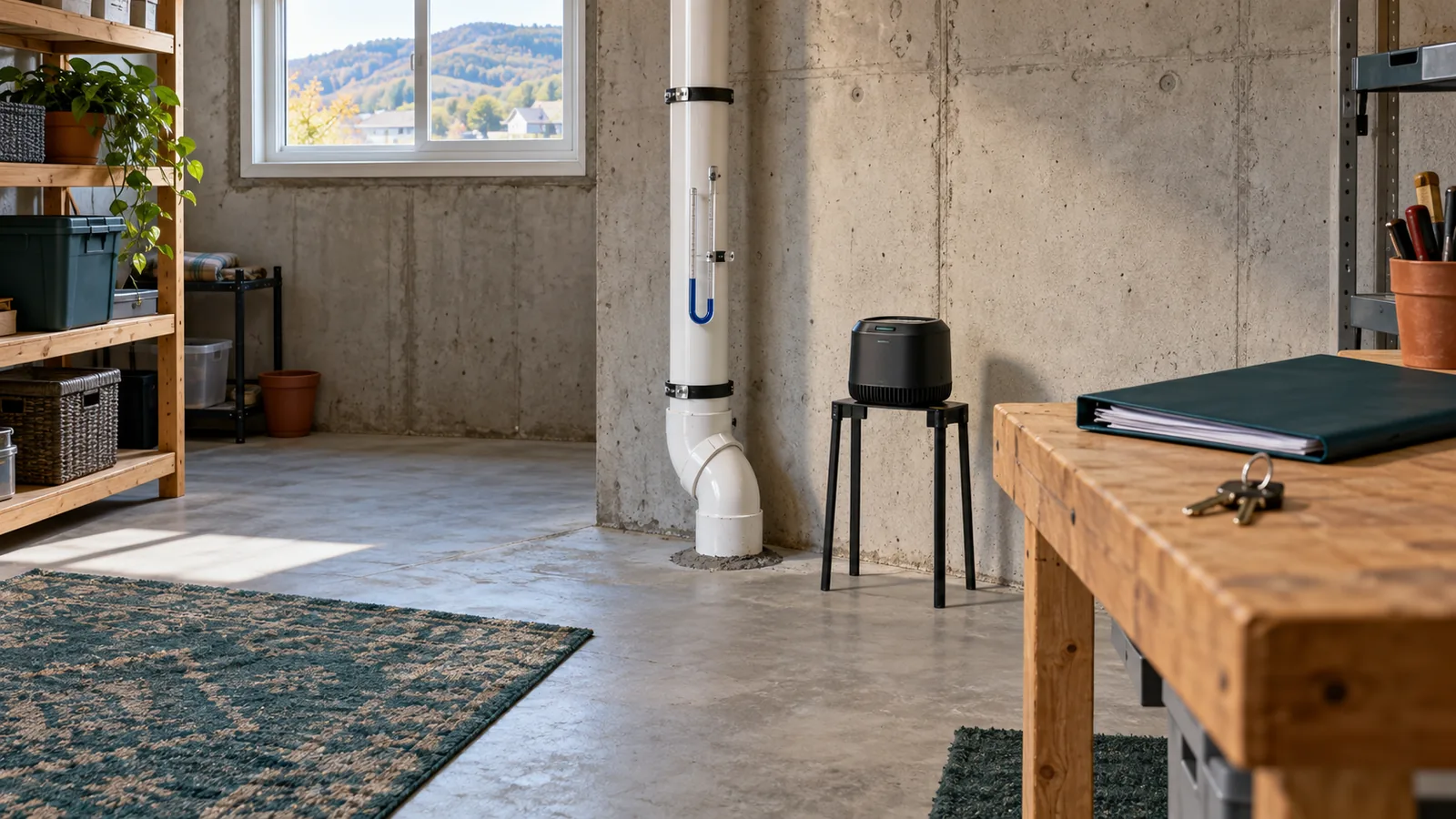
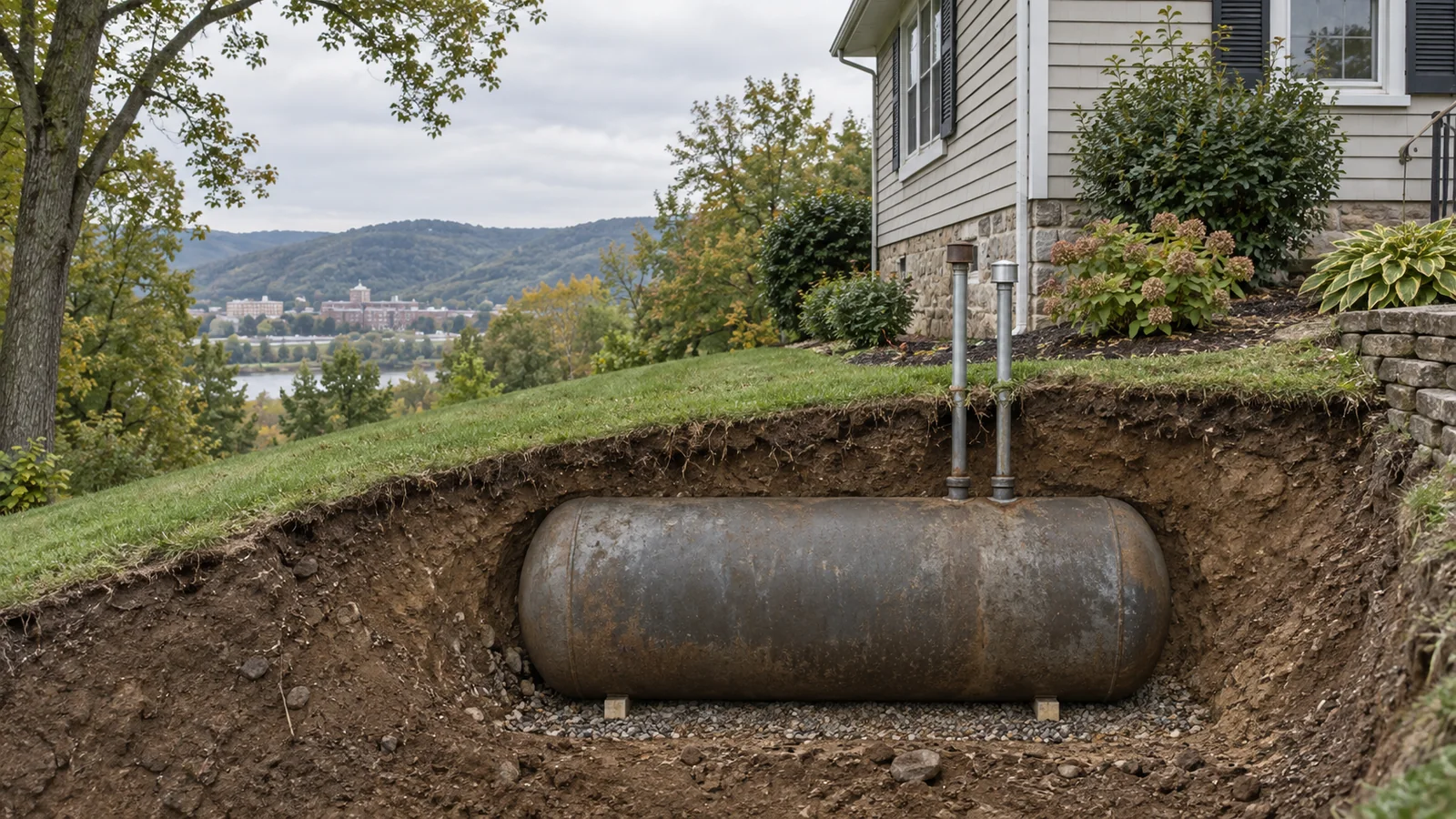
Record where the tank sits in relation to the house, driveway, property lines, utilities, drains, lower-level rooms, and neighboring parcels. Note whether it is above ground, beneath the yard, or inside a basement or other structure. Photograph accessible fill, vent, supply, and return lines without opening, cutting, or disturbing them.
Then answer the first practical questions:
- Does the home still use heating oil?
- Is the tank connected to active equipment?
- Who owns the tank?
- When was it last filled, serviced, tested, emptied, or taken out of use?
- Are there additional pipes or tanks that do not match the current system?
- Which answers come from records, and which are only recollections?
If the house changed to another heat source, gather the conversion invoice and related mechanical or electrical records. A new furnace does not establish what happened to the prior tank.
Understand what a state tank search can and cannot prove
West Virginia Code Section 22-17-3 defines an underground storage tank for the state's UST program, then excludes tanks used to store heating oil for use on the premises. The federal UST program has a similar exclusion. The EPA also directs owners to the state or local agency because other requirements may apply.
That distinction matters during a sale. A heating-oil tank may not appear in a regulated UST record because it falls outside that program's definition. The absence of a record does not establish that the tank is sound, empty, properly closed, or never present.
Aboveground tanks require a separate analysis. The West Virginia DEP's current FAQ says registration depends on whether the structure meets the state definition, what it stores, and other location-specific factors. The page points owners to the agency's survey tool rather than giving every residential heating-oil tank the same answer.
Use the West Virginia DEP tank program and its staff contacts to identify the right program. Ask a narrow question that describes the tank's location, use, capacity, and status. Keep the agency response with the property file.
Build a record before choosing removal or testing work
Create a tank folder even if the paperwork is incomplete. The seller documentation plan gives the rest of the home's records a similar structure.
Look for:
- installation, delivery, service, and repair invoices;
- manufacturer information and known capacity;
- photographs that show the tank and piping over time;
- conversion or disconnection records;
- permits or correspondence about removal, closure, or mechanical work;
- test results, soil sampling, disposal receipts, or environmental reports; and
- insurance correspondence or claims tied to the tank or a release.
Keep the original report, not only a seller-written summary. A receipt for pumping out a tank answers a different question from a removal report. A contractor invoice may describe work completed, but it may not address soil, groundwater, remaining piping, or the legal effect of the work.
Match every document to the exact property. The Monongalia County parcel search can help identify the district, map, parcel, and deed reference used to organize the file. Parcel information is a locator. It does not replace a survey, title review, environmental evaluation, or site inspection.
Ask about Morgantown permits before scheduling work
Inside city limits, the City of Morgantown routes building, mechanical, electrical, plumbing, and other applications through its permitting and registration portal. The city also directs users to its zoning viewer to confirm whether an address is within the municipality.
Describe the proposed work to the responsible office before assuming which permit applies. Tank removal may involve more than the tank itself. Access, excavation, grading, mechanical disconnection, structural protection, utilities, and restoration can each raise a separate question.
For a property outside Morgantown city limits, confirm the responsible offices for that address rather than applying city instructions to the whole mailing area. Ask contractors what credentials, disposal documentation, testing, and closeout records they will provide. Put their answers in writing before work starts.
Separate a routine records gap from a suspected release
An unknown installation date is a records gap. Odor, staining, unexplained fuel loss, damaged piping, affected soil, or a professional's concern may call for a different response. Do not investigate a possible release by excavating or dismantling the system yourself.
The West Virginia DEP publishes an official spill line and nonemergency contact information. If there is an immediate danger, call 911. For a suspected release or site condition, ask DEP and a qualified environmental professional what response, reporting, testing, and documentation fit the situation. Do not delay a safety or reporting decision to preserve a listing schedule.
Keep marketing language within the evidence. "Tank removed" should be supported by a record that identifies the tank and work. "No known leak" is not a substitute for testing, professional review, or a required disclosure. Work with the broker and attorney on how verified facts and unresolved questions should be handled in the sale.
Give the buyer one reviewable tank file
Before listing, make a short index that tells the reader what is present and where each supporting document sits. A useful file might identify the tank, current heat source, last known service, known status, professional evaluations, completed work, permits, agency correspondence, and unanswered questions.
Then carry the open items into the sale plan:
- Confirm the property and jurisdiction.
- Identify every tank and visible connected line.
- Gather installation, service, conversion, and closure records.
- Ask the appropriate agencies which programs or permits apply.
- Obtain qualified condition or environmental advice when needed.
- Review insurance, lending, contract, and disclosure questions with the responsible professionals.
- Preserve final invoices, reports, disposal receipts, and permit closeout documents for the buyer handoff.
A heating-oil tank is easier to discuss when the property file separates facts from assumptions. That lets the seller choose preparation work with a calmer view of the evidence and gives the buyer a specific set of documents to review. Contact Michelle about selling a Morgantown home with the street or general area and what you already know about the tank.
Sources
- West Virginia Code Section 22-17-3West Virginia Legislature · Accessed September 28, 2026
- Underground Storage TanksWest Virginia Department of Environmental Protection · Accessed September 28, 2026
- Frequently Asked QuestionsWest Virginia Department of Environmental Protection Aboveground Storage Tank Program · Accessed September 28, 2026
- Frequent Questions About Underground Storage TanksUnited States Environmental Protection Agency · Accessed September 28, 2026
- Permitting, Licensing, and RegistrationCity of Morgantown · Accessed September 28, 2026
- Report an EmergencyWest Virginia Department of Environmental Protection · Accessed September 28, 2026
- Parcel SearchMonongalia County Assessor · Accessed September 28, 2026
A local next step
Make the next step feel clearer.
Michelle can help turn this guidance into a calm, property-specific plan for a first home, sale, or multifamily property in Morgantown.
Contact Michelle
About the author
Michelle Davidson
Michelle Davidson is a Morgantown native and REALTOR(R) who works with first-time home buyers and multifamily property investors. She has firsthand experience buying, selling, and owning local property.
Meet Michelle